Arrival in Wales
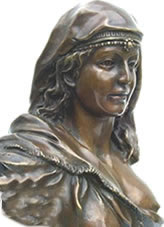
Tradition hands down that the Lovells came from Spain, fleeing persecution along with such families as the Boswells, Hearns, Coopers and Lees. After arriving in Cornwall from France, they established a travelling circuit between England and Wales.
As with many Gypsy tribes, a British surname was adopted and used among non-Romanies instead of their own. Lovell was chosen either because it meant the same as their Romani name (which means good-looking) or, legend says, because they protected a "Lord Lovell" from being imprisoned and were allowed to use his name in gratitude. 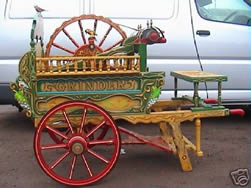
Slack in the South
Most Lovells in the West Country and South Wales can be traced back to Slack Lovell, born in the 1700s. From him descended Major, Ladin, William, Tom, Frederick, Harriet, Charlotte and Trenit.
Their original circuit was from Cornwall up to Staffordshire or east to London but gradually extended into Wales. Stopping places included King Street in Plymouth (Cornwall), the Upper Race in Pontypool (Torfaen) and Brooks Field in Newport (Monmouthshire).
The men dealt in knife-grinding, horses and farmwork, whilst the women went from door to door selling pegs and flowers. As always, there was dukkering (fortune-telling) and playing music.
Slack Lovell's eldest son, Major, married Rosanna "Hanna" Twig in 1854 and settled down in Carmarthen. He was a razor-grinder initially, then kept a boarding house. They had nine children, including John married to Anne Jones, George to Isabella Smith, and Arty to Susanna Smith.
Ladin married gaji (non-Romany) Phoebe Ford, and William married Pen Lovell. Tom married a gaji. Harriet may be the Harriet Lovell who married Jerry Burton from Somerset. Harriet and Jerry returned to South Wales, and their daughter Ela married Steve Connaught Ayres. Charlotte married Lamerok Lock(?), and Trenit chose Adolphus Lovell from the North.
Frederick married Carnation Lovell and travelled at first around his wife's North Wales, often accompanied by Bui Boswell. Later on, they moved south. They had ten children, including William, John, Arthur, Henry, Oli, Sabaina, Lementina and Syrenda; sons Llewelyn and Josh emigrated to the States.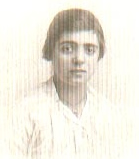
Syrenda Lovell
Frederick's son Syrenda married Rosi Small from Cornwall, and they travelled extensively from there up to the Midlands, from South to North Wales, and also to London.
In 1884 their son Adolphus was born at the King Street atchin tan (stopping place) in Cornwall. Adolphus and his wife Bertha Lee travelled in Reading and bowtop vardos, with Adolphus grinding cutlery and horse-dealing whilst Bertha and her daughters sold from door to door.
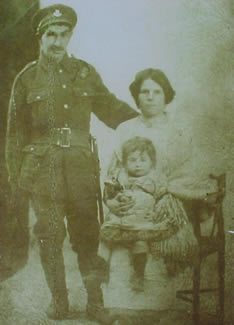
Like many Gypsies, the Lovells enlisted during WW1, and Adolphus fought in France on horseback. Between the wars Brooks Field in Newport beside the River Usk had been a favourite camping place and was known as the Travellers Rest. In the 1940s it was officially closed down, and many Gypsy families were forced to live in houses for the first time. Adolphus settled in Newport and opened a marine store.
Adolphus Ruben Lovell
Adolphus's son Adolphus Ruben was born at the Pontypool atchin tan in 1923. Most years his family travelled from Cornwall up to Westmorland, returning to Wales for winter. He looked after the ponies in which the Lovells traded and helped with the knife-grinding work.
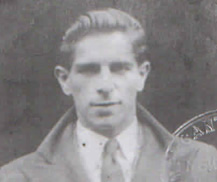
During WW2 Adolphus Ruben joined the British Merchant Navy and went with them to New Zealand, where he met Rona Beard from a Scottish traveller family. Adolphus had rarely gone to school and was illiterate all his life, but he was good with the heavy horses which were still in use on the farms.His son Robert was born in New Zealand. Bob Lovell is a Kiwi-Romany singer/songwriter and very proud of his heritage.
Nathaniel in the North
In North Wales many Lovells are descended from Nathaniel and his wives Saifi and Sally Scamp (daughters of Riley Scamp and Vansi Lee). From them came Moti, Jack, Seth, Adolphus, Uriah, Edwin, Robert, Noah, Eldorai (who emigrated), Lily and Israel.
One time Seth Lovell and Oliver Lee were near Machynlleth when they came across Harry (Zachariah) and Somerset Joe Lock from Shropshire. Harry had recently wed Maria Wood and wanted to stay in her country. Seth and Oliver challenged the Locks to a fight for the right to travel the area, but they lost, and henceforth Seth had to keep further south in accordance with Gypsy tradition.
Lovell images copyright Bob Lovell 2006.
Article copyright ValleyStream Media 2006.
Strict Copyright Warning
All texts/audio/still/motion picture images are strictly copyright to ValleyStream Media 1980-2012 or to the stated contributor/
copyright holder/s or "unKn". Any unauthorised copying of any images or material from this website for any use is strictly prohibited without written permission from the image owners - owners of unknown images ("unKn") from this website please contact us for fair use or image withdrawal. All rights reserved.